What is scalp micropigmentation?
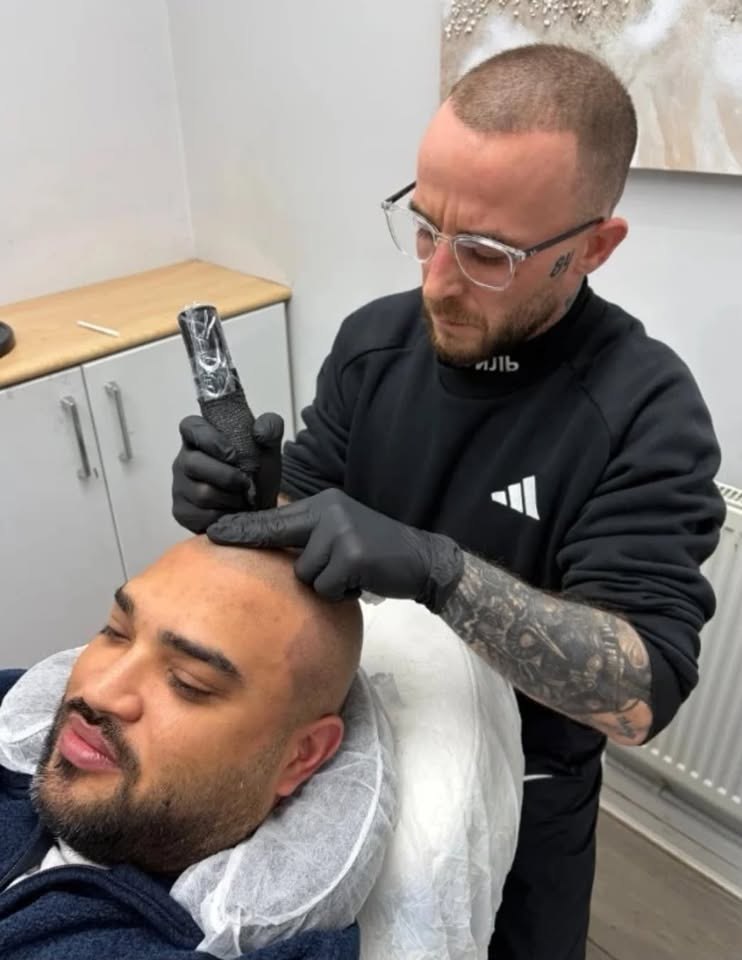
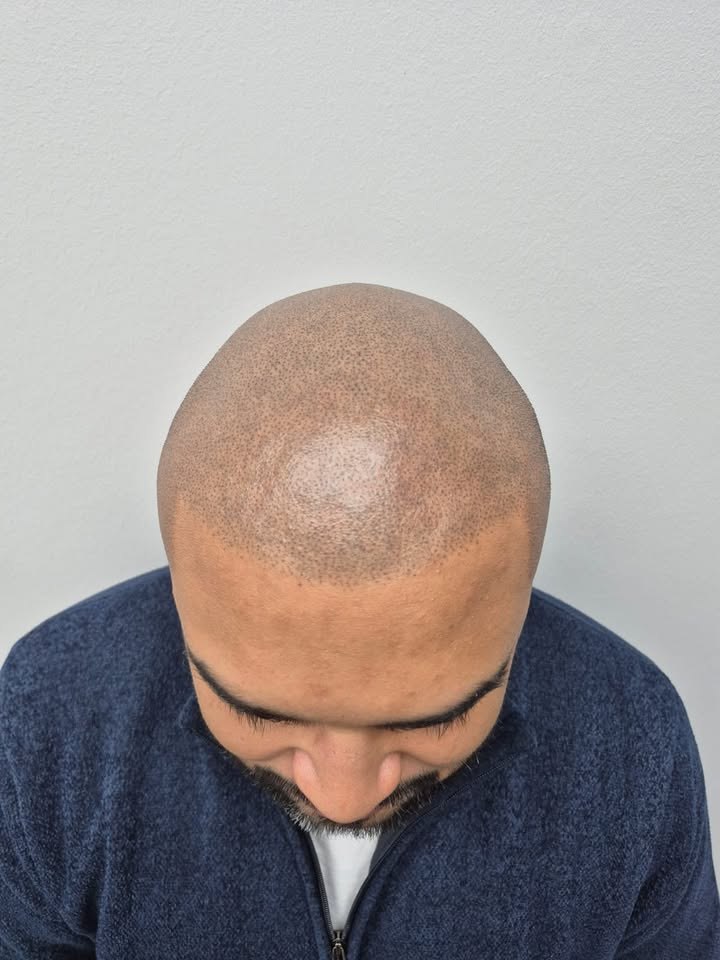
Scalp micropigmentation, or SMP, is a specialist cosmetic tattoo for the scalp. Using a very fine needle, thousands of tiny dots of pigment are placed into the upper layers of the skin. Each dot copies the look of a single hair follicle, the dark point you see when hair is cut very short.
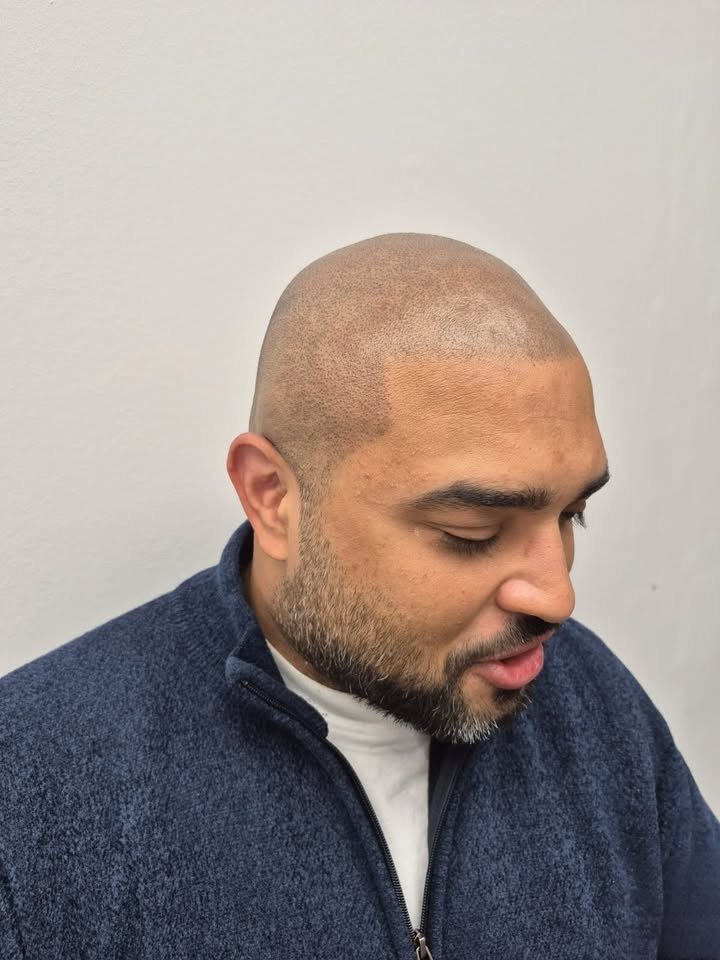
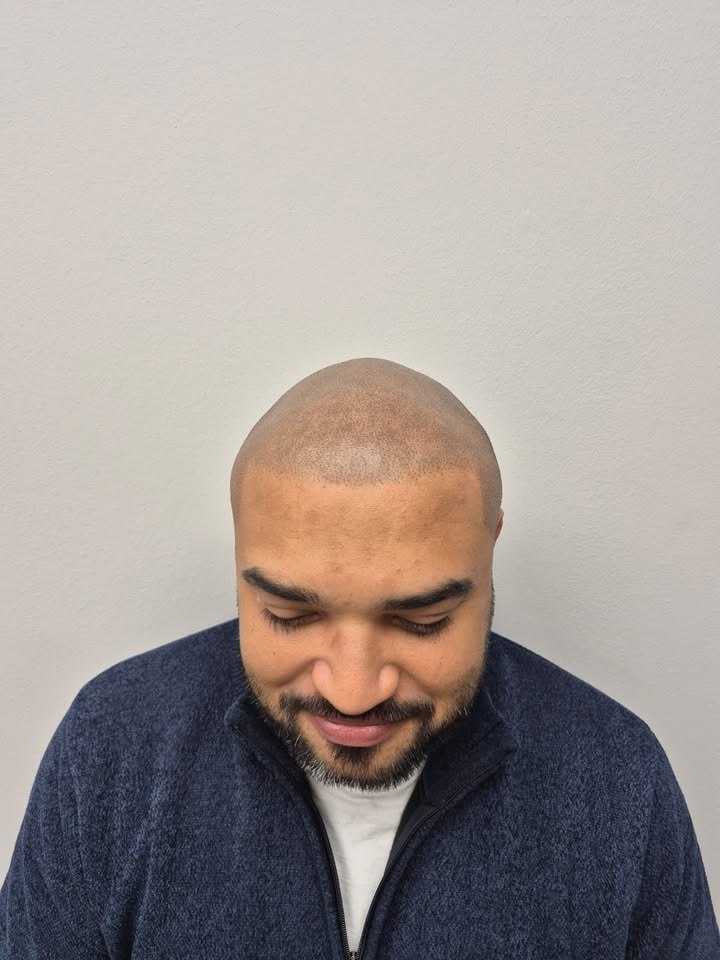
Built up in layers and in slightly different shades, those dots create the appearance of a closely shaved head of hair, a sharper hairline, or more density where hair is thinning.
SMP doesn't grow hair. It's a visual technique that recreates the look of hair, not a medical treatment for hair loss. Your natural hair carries on as it would have done.
How is it different from a normal tattoo?
It uses the same basic idea, pigment in the skin, but almost everything else is different:
- Smaller needles, so each dot is the size of a follicle rather than a line.
- Shallower placement, which helps the dots stay crisp instead of spreading and blurring over time.
- Specialist pigment, designed to heal to a natural, matte shade rather than a solid block of colour.
- A dot-by-dot technique: no lines, no shading, just individual impressions layered over several sessions.
Who it's for
SMP suits a wide range of people and types of hair loss. These are the most common reasons people come to us:
Receding hairline
Rebuild a natural, age-appropriate hairline and fill in the temples for a sharp, clean-shaven look.
Crown and full head
For advanced hair loss or a fully bald head, SMP can recreate the look of a full buzz cut from front to back.
Thinning hair, men and women
Density work places pigment between existing hair, so less scalp shows through and longer hair looks fuller.
Scars
Camouflage for hair transplant scars (strip and FUE) and other scalp scars, blending them into the surrounding hair.
Alopecia
Covering patchy or total hair loss from alopecia. We'll talk through how your type of alopecia might affect the result.
Hair transplant support
Adding density to a transplant that didn't give the coverage you hoped for, or to areas a transplant can't reach.
What it can and can't do
Good results start with realistic expectations, so here's the honest version.
SMP can
- Recreate the look of a short, freshly shaved head of hair
- Give you a defined, natural-looking hairline
- Make thinning areas look fuller
- Disguise scars and patches
- Cut out daily concealers, fibres and hats
SMP can't
- Grow new hair or stop hair loss
- Recreate the look of long hair on a bald area
- Give texture you can feel. The scalp stays smooth to the touch
- Look like a full head of hair if you grow your existing hair long over a bald area
The process, step by step
- Free consultationWe look at your hair loss, skin tone and natural hair colour, talk through the look you want, design your hairline together and go through your medical history. No pressure, and no obligation to book.
- Session one: the foundationA lighter first layer that sets the hairline shape and the base shade. It's deliberately soft, because it's always easier to add than to take away.
- Session two: building densityAfter the first layer has healed, more dots go in between the first ones, in slightly different shades, to build depth and fill any gaps.
- Final session: the detailFine-tuning the hairline, the blend into your existing hair and any areas that need a little more, for a soft, natural finish.
- Refreshing over timeYears down the line, as the pigment naturally softens, a refresh session brings your SMP back to full sharpness.
Your treatment is done over three sessions, spaced a week or two apart so each layer can heal before the next goes in. Each session takes between 1 hour 30 minutes and 5 hours, depending on the treatment.
Does it hurt?
Most people describe SMP as uncomfortable rather than painful, and generally less intense than a traditional tattoo, because the needle doesn't go as deep. Everyone is different, though. Some areas, like the temples and the crown, tend to be more sensitive than others.
You can take breaks whenever you need one, and we'll check in with you throughout the session.
Healing and aftercare
Good aftercare is half of a great result. The pigment needs time to settle into the skin, and what you do in the first few weeks decides how crisp and even your SMP heals. Follow this plan after every one of your three sessions.
- Days 1 to 4: keep it dryDon't wash, wet or sweat on your scalp. That means no showers over your head, no gym and no heavy lifting. Avoid touching or scratching the area, sleep on a clean pillowcase, and if you need to go out in the rain or sun, wear a clean, loose-fitting cap.
- Day 5: first washWash gently with lukewarm water and a mild, fragrance-free shampoo, then pat dry with a clean towel. Don't rub. You can now apply a thin layer of fragrance-free moisturiser once a day, and get back to light exercise.
- Day 7: shaving againYou can shave the treated area again, using an electric shaver or clippers rather than a wet razor. Go gently and don't press hard over the treated skin.
- Weeks 2 to 4: protect itNo swimming, saunas, steam rooms or sunbeds, and keep direct sun off your scalp. Avoid exfoliating scrubs and harsh hair products until the 4 weeks are up.
- After 4 weeks: for lifeBack to normal, with two habits that keep SMP looking sharp for years: SPF 30 or higher on your scalp whenever you're outdoors, and regular moisturising.
What's normal while you heal
- Some redness for the first day or two
- Dots looking darker and sharper than the final result. They soften over the next few weeks
- Tiny flakes coming away as the skin heals. Let them fall off on their own and don't pick them
- Slight patchiness between sessions, which is exactly what your next session is for
When to get in touch
If you notice redness or swelling that's getting worse rather than better, heat, pus, or anything else that worries you, message us straight away and speak to your GP or pharmacist.
Questions while you're healing? Message Adam on WhatsApp any time. No question is too small.
How long it lasts
SMP is long-lasting but not completely permanent. Like any pigment in the skin, it softens gradually over the years, mostly because of sun exposure and the skin's natural renewal. Many people book a refresh session every few years to keep the look sharp.
Looking after your SMP
- Wear SPF on your scalp outdoors. The sun is the biggest cause of fading.
- Moisturise regularly to keep the skin healthy and the pigment looking even.
- Keep your hair short if you've gone for the shaved look, so your natural hair and the pigment match.
- Avoid harsh exfoliants on your scalp, which can speed up fading.
Is it right for you?
SMP works for most people, but it's worth talking to us first, and checking with your GP, if any of these apply to you:
- An active scalp condition, such as psoriasis, eczema or dermatitis
- A history of keloid or raised scarring
- Blood-thinning medication, or a condition that affects healing
- Pregnancy or breastfeeding
- Very light or grey hair, where we'll be upfront about what's realistic
We'll go through all of this at your free consultation. If SMP isn't the right fit, we'll tell you.
Cost
The price depends on the area being treated. Each price covers your full treatment, all three sessions, so there are no surprises along the way. Consultations are always free.
- Scar camouflage 1 hr 30£295
- Hairline reconstruction 2 hr£395
- Temple reconstruction 2 hr£395
- Crown restoration 3 hr£695
- Density fill, top and sides 3 hr 30£795
- Full scalp 5 hr£1,500
Prices are for the complete three-session treatment, as listed on our booking page. Your consultation will confirm exactly what you need.
Deposits. A non-refundable deposit secures your appointment. With at least 48 hours' notice it can be moved to a new date; with less notice the deposit is lost. Read the full booking policy
Common questions
- Will it look fake?
- Done well, no. The key is a natural, age-appropriate hairline, the right pigment shade for your skin and hair, and dots that vary in size and depth. That's why the work is built up gently over several sessions.
- Can I still grow my hair?
- Yes. SMP doesn't affect your natural hair. For the shaved look, most people keep their hair very short so it blends with the pigment. With density work, people with thinning hair often keep it longer.
- Is SMP the same as a tattoo?
- It's a form of cosmetic tattooing, but the needles, pigment, depth and technique are all different, which is what makes it look like hair rather than ink.
- Can it be removed?
- Laser removal is possible, though it takes several sessions. That's another reason we start soft and build up gradually rather than going too dark too soon.
- Does it work for women?
- Yes. Female density treatments place pigment between existing hair to reduce the contrast between hair and scalp, so thinning areas and partings look fuller.
- Will it fade or change colour?
- It will soften slowly over the years, especially with sun exposure. Using SPF and booking an occasional refresh keeps it looking sharp.
- Can I go back to work straight away?
- Most people can. Your scalp may look a little red for a day or two, so some people like to book before a weekend.
More answers on our Instagram, @dots.smp, under the SMP 101, FAQs and Hair Myths highlights.
From the chair to the finished look.